SMPS Webinar
Beyond AI: The People-First Strategy Your AEC Firm Needs to Win Work Smarter

ZOOM

Apr 25, 2024

10:30 AM (PT)
Register Now


.png)
As we close out 2025, I find myself reflecting on just how quickly our industry continues to evolve and how energizing it has been to grow alongside it.
Construction has always been an industry defined by relationships, experience, and execution. Over the past year, however, there has been a clear shift in how firms think about technology. It is no longer viewed as a support function, but as a strategic advantage.
The conversations we are having today are less about whether to modernize and more about how to do it in a way that actually helps teams win work and operate more effectively.
At ProjectMark, 2025 was a year of real momentum. We focused on helping AEC teams bring clarity to their pursuits, simplify how they manage relationships, and make better decisions with their data. None of this would be possible without the trust of our customers, the commitment of our team, and the partnerships we continue to build across the industry.
This year reinforced something we have believed from the start. When technology is built specifically for construction, it changes how teams work and how they succeed.
The way firms in the construction industry approach technology continued to mature in 2025.
What stood out most was not the pace of new tools entering the market, but how intentional teams became about using them. The focus shifted from adding software to solving specific problems.
AI is a good example of that change. Rather than experimenting for the sake of it, firms began looking for practical applications. They wanted systems that reduce manual work, improve accuracy, and surface useful insights without adding complexity.
We also saw less tolerance for disconnected tools. Teams are no longer willing to manage pursuits, contacts, and performance data across multiple platforms that do not talk to each other. Integration is now an expectation, not a bonus.
At the same time, visibility became a priority at every level of the organization. Leadership teams want a clear picture of what is happening in the pipeline and where efforts should be focused. When that visibility exists, teams move faster and make better decisions.
These shifts signal a broader change in the industry. Technology is no longer about keeping up. It is about operating with clarity and confidence.
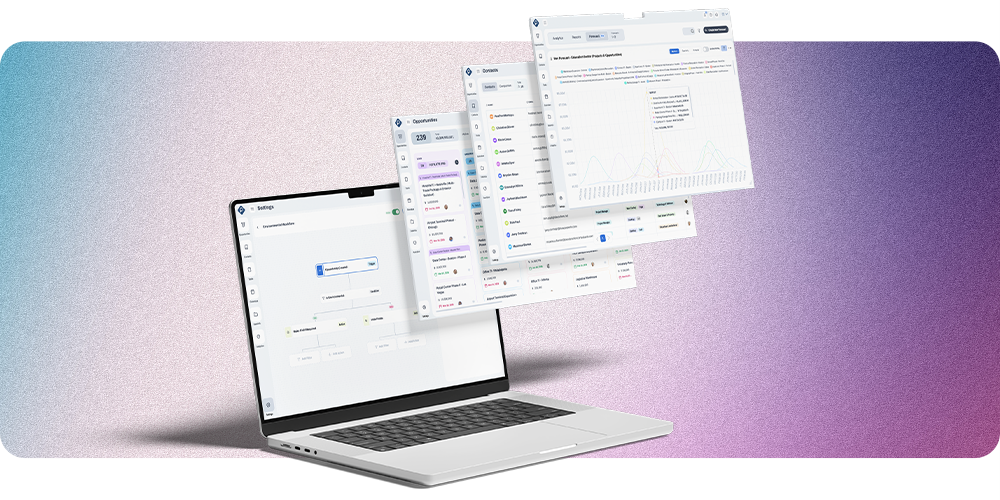
In 2025, our product development remained grounded in a clear goal: help AEC teams work with greater clarity, speed, and confidence. Rather than chasing features, we focused on improving how teams capture information, collaborate across roles, and turn data into action.
This year, we delivered meaningful advancements across several core areas:
Connected Systems: Deeper integrations with key construction platforms to ensure pursuit, project, and financial data stay aligned without duplicate work.
Pipeline Visibility: Enhanced tools for forecasting, reporting, and pipeline management, giving leadership clearer insight into upcoming opportunities and revenue confidence.
Workflow Efficiency: Expanded automation and system rules to reduce manual tasks and help teams stay focused on high-value work.
Relationship Management: Continued investment in how teams manage contacts and companies, improving accessibility, collaboration, and data consistency across the organization.
Governance & Control: New capabilities that improve auditability, security, and administrative oversight, supporting the needs of growing and enterprise-level firms.
Alongside these initiatives, we made ongoing improvements to performance, usability, and overall product experience. The result is a platform that feels more intuitive, more reliable, and more aligned with how AEC teams operate day to day.
Interested in seeing how these advancements set the stage for an even more powerful 2026? Book a walkthrough to explore what’s coming next and how ProjectMark can help your team work with greater clarity, efficiency, and confidence in the year ahead.
2025 was a strong year of growth for ProjectMark, and that growth came with purpose.
We continued to see firms move away from legacy CRM systems that were difficult to use or never built for construction. Others chose ProjectMark as their first CRM after outgrowing spreadsheets and disconnected tools. In both cases, the reason was the same. Teams wanted a better way to align business development, relationship management, marketing, and leadership.
As we grew, we stood shoulder to shoulder with the firms we serve, partners who trusted us to support their success, celebrate their wins, and grow together.
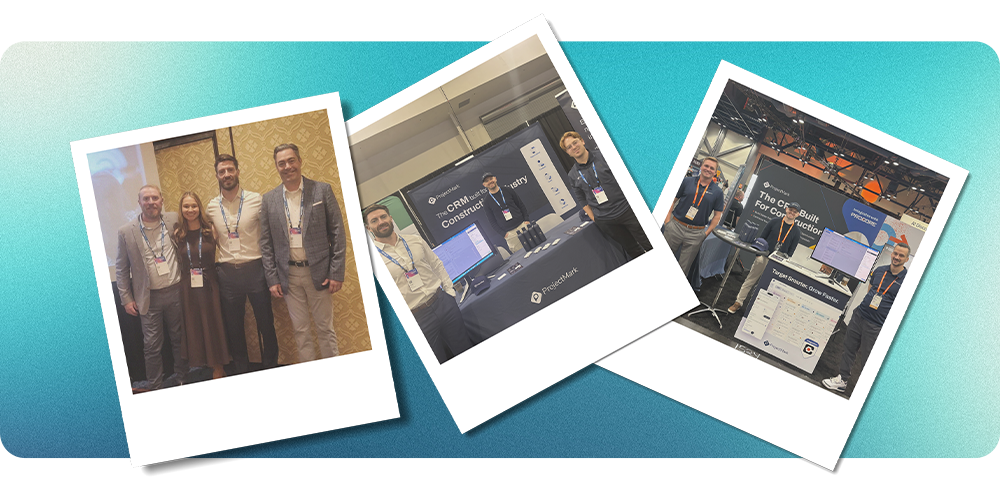
This year, we saw:
What matters most is not the scale of the growth, but what it represents.
Firms are making intentional decisions about how they manage relationships and pursue work. They are choosing systems that support how they actually operate, not how generic software assumes they should.
That validation means a great deal to our team, and it continues to shape how we build.
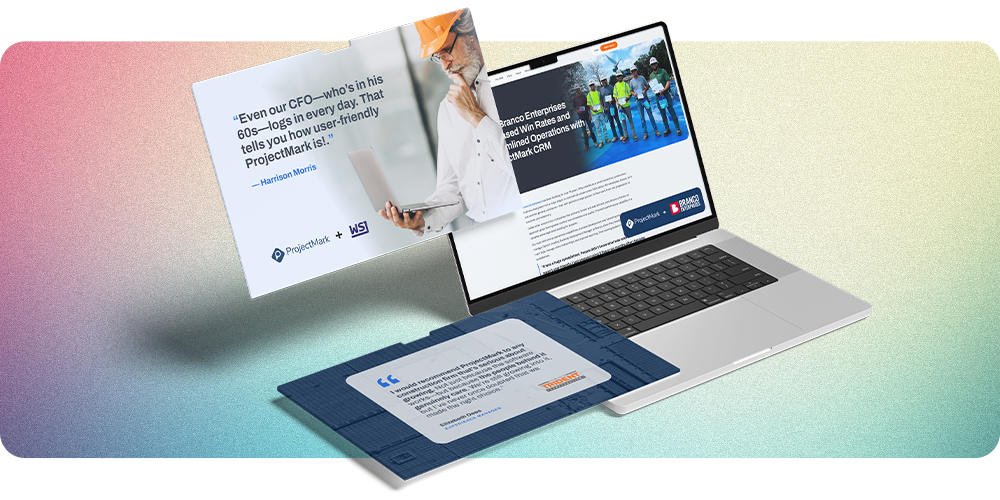
In 2025, we were proud to support leading construction firms as they shifted from outdated systems to modern, purpose-built CRM strategies.
Branco Enterprises replaced Salesforce with ProjectMark, streamlined their RFP workflows, and improved win rates by focusing on the right opportunities.
“This was built by someone who has worked in construction, it just made sense.”
Garrett Dowling, Business Development Manager
WSJ Enterprises unified precon and BD teams with a shared CRM, enabling real-time visibility and smarter, data-backed pursuit decisions.
“Everyone’s on the same page now. There’s no more digging through emails.”
Harrison Morris, Manager of Business Development
Trident Construction moved from static spreadsheets to dynamic forecasting and reporting, giving leadership clearer insight into upcoming work and long-term strategy.
“It’s not a platform we’re learning to use, it’s one we’re shaping to match how we already work.”
Elizabeth Dees, Experience Manager
Each of these firms brought a clear vision and used ProjectMark to operate with more clarity, alignment, and control.
And they weren’t alone. Rylko Builders, Henley Construction, KCI Construction, and Bartlett Cocke also shared how ProjectMark helped them modernize operations, reduce bid cycle times, and win more work. Their stories continue to reflect the same trend: when AEC firms adopt systems built for how they actually operate, they see real results
Across leading podcasts and webinars with partners like Built by Builders and SMPS, we shared real-world, people-first insights on construction technology, highlighting why traditional CRMs fall short for AEC firms and how a purpose-built tech stack can strengthen relationships, clarify pipelines, and drive smarter, scalable growth in 2025.
Podcasts:



Webinars:





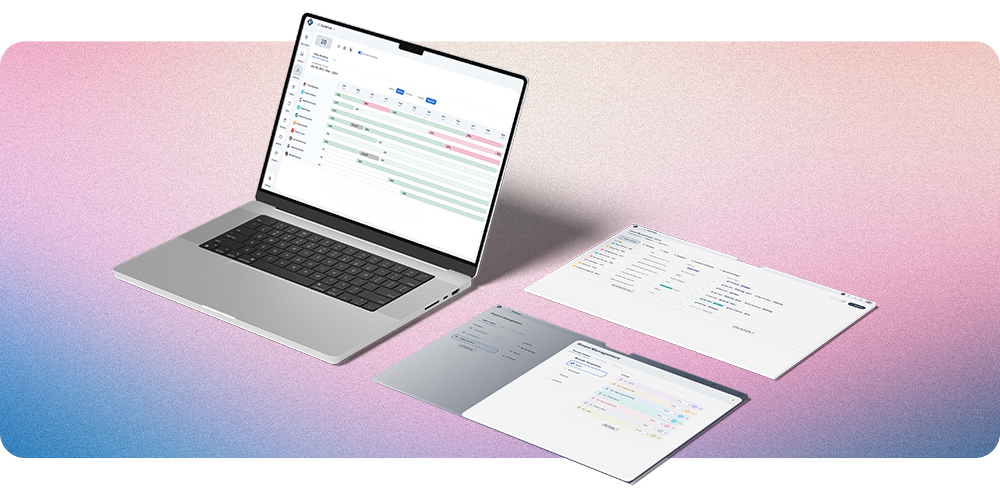
As pursuits grow more complex and relationships matter more than ever, ProjectMark is focused on helping your team work smarter, move faster, and make better decisions: without adding complexity.
In 2026, you’ll see:
Everything we’re building is designed to reduce friction, not add features for the sake of it. The goal is simple: more time building relationships, less time managing systems.
As you head into 2026, our focus is on helping your team manage pursuits with less friction, better insight, and stronger connections across your tech stack.
You can expect ProjectMark to keep getting smarter in practical ways, easier for teams to adopt, and more seamlessly connected to the systems you already use - so information flows where it’s needed, without extra work.
Just as important, what comes next will continue to be shaped by you. The most impactful improvements to ProjectMark come directly from conversations with AEC teams navigating real deadlines, real pursuits, and real pressure to win the right work.
Thank you to all of our customers and partners for trusting ProjectMark in 2025. We’re proud to support the way you work this year - and excited to keep building alongside you in 2026.
Interested in learning more about our 2026 plans, book a walkthrough of what’s next.


